
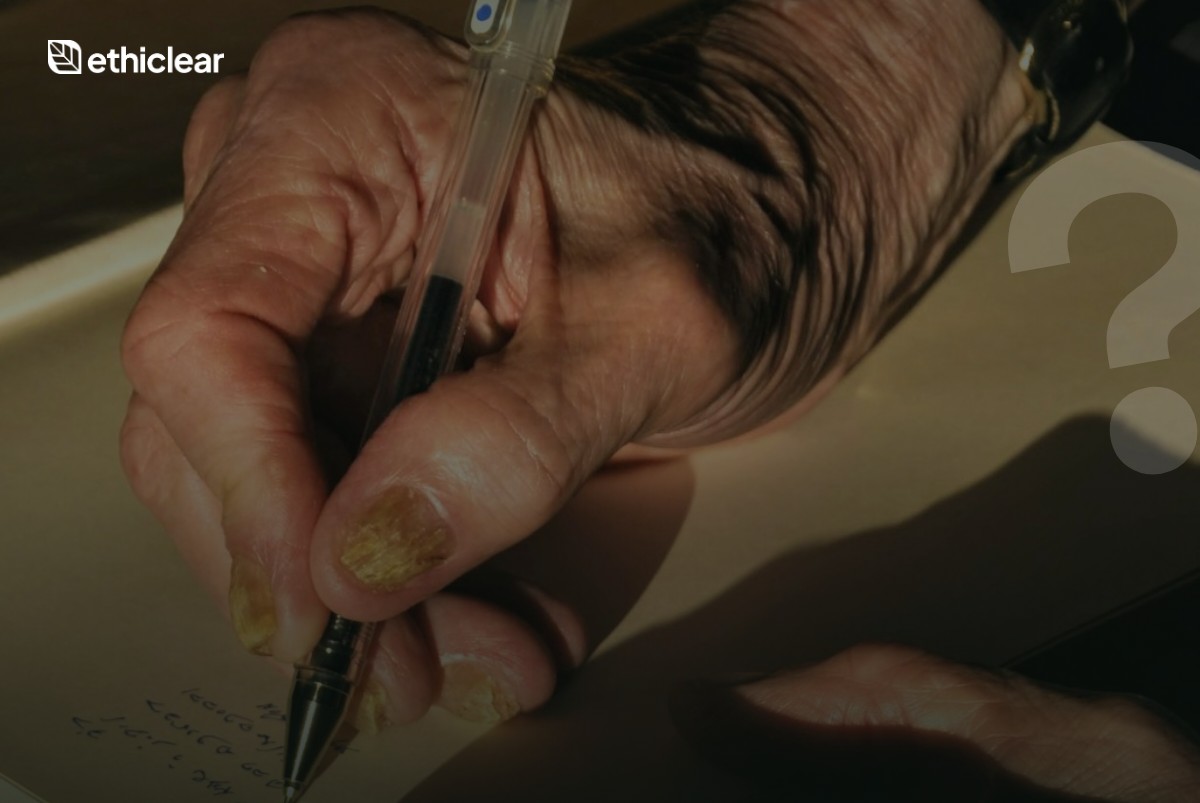
A signed or ticked consent form proves that a specific action took place at a specific time. On its own, it says very little about whether the person actually understood what they were consenting to, or which version of the information they saw when they did it. A genuinely useful audit trail is built to answer that second question, not just the first.
The problem
Most consent records only prove an event happened, not what was understood — and a study that hasn't tracked which version of the participant information sheet and consent form each participant actually saw can find itself unable to answer a straightforward later question: did this participant know about this specific risk before agreeing to take part? Consent materials get revised over the life of a study — clarified wording, an added detail, a corrected error — and without a link between participant and version, it's impossible to say later exactly what a given participant was told.
The challenge
A trail worth having answers questions nobody's asked yet: version history, timestamps, and evidence of a real chance to ask questions all matter, not just the fact that consent was given. A vague or missing timestamp is far weaker evidence than a precise one, particularly for digital processes where the sequence of events can be logged automatically and far more reliably than paper ever could. And where a study requires re-consent — a substantial protocol amendment, a new use for existing data — the same standard applies: exactly which version was shown, when, and with what opportunity to ask questions or decline. Re-consent handled more casually than the original process creates a weaker link in exactly the part of the record most likely to be scrutinised later.
The solution
- Go beyond a signature. A signature alone doesn't prove informed consent — it proves an event, not understanding.
- Record what was actually shown, not just that something was: the specific version and timestamp, not a generic description of the process.
- Make the trail useful for you, not just for an auditor — a well-built trail lets a study team answer its own questions confidently, and answer a participant's own later question about what they agreed to, rather than reconstructing an uncertain history from memory.
This is considerably easier when the consent tool is chosen with this in mind from the start, rather than retrofitted onto a system that wasn't designed to log this level of detail — check before committing to a platform whether it can actually produce the version-and-timestamp record a strong audit trail needs. A paper-based process can meet the same standard with the right discipline: a version number printed on every form, a consistent place to record the date, a reliable filing system. And if a genuine gap in the record turns up, recording it honestly, with whatever reasonable explanation exists, is a far stronger position than reconstructing a tidier-looking record than the evidence supports.


